
Source: Link Testing Instruments Co.,ltd.
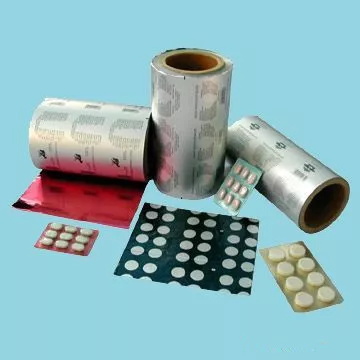
In the blister packaging of solid dosage form pharmaceuticals, pharmaceutical-grade polyvinyl chloride (PVC) rigid film is the core substrate for forming the blister cavities. The uniformity of its thermal shrinkage performance directly determines the consistency of the blister cavity depth and the regularity of the cavity shape, and affects the subsequent heat sealing strength and sealing integrity with the aluminum foil. If there are differences in the thermal shrinkage behavior of PVC rigid films from different batches or different suppliers, even using the same parameters on the same blister forming machine, it may lead to inconsistent blister cavity depths. This can range from affecting the appearance to, in more serious cases, causing drug spoilage due to poor local sealing. A large pharmaceutical company faced this challenging problem when integrating its global supply chain: multiple PVC rigid film suppliers provided products that were "theoretically compliant with specifications, but exhibited unstable performance in actual production."
I. Specific Problem: Quality Fluctuations in Blister Packaging under a Multi-Supplier System
To ensure supply security and cost optimization, the company certified three PVC rigid film suppliers (A, B, and C) that met YBB standards. During initial small-scale trials, all three suppliers' products passed conventional physical and chemical performance tests. However, when switching between different suppliers' films for large-scale production, operators reported noticeable differences in the formed blisters, even without adjusting any parameters of the blister forming machine (key heating plate temperature set at 120°C). When using film from supplier B, the blister cavities were slightly shallower, and the edge contours were less sharp; occasionally, uneven cavity depth within the same sheet was observed. This led to two potential problems: 1) inconsistent blister appearance, affecting brand image; 2) increased false positive rates in the online visual inspection system, impacting production efficiency. The quality department needed to answer a fundamental question: under the same process conditions, is this performance difference due to random process fluctuations, or are there systematic differences in the critical thermoforming performance of the rigid films from the three suppliers that are not detected by existing testing methods?
II. Thermal Shrinkage Behavior "Fingerprint" Analysis using the LTRSY-03Thermal Shrinkage Tester
The company's quality control laboratory decided to use the uniform heating environment of a liquid medium (silicone oil) provided by the LTRSY-03 thermal shrinkage tester to conduct high-precision measurements of the rigid films from the three suppliers, beyond standard requirements, to establish a "thermal shrinkage behavior fingerprint" for each material.
Test method: Sufficient quantities of longitudinal (MD, along the roll direction) and transverse (TD) samples were cut from the latest batches of products from suppliers A, B, and C. In the LTRSY-03, the temperature was set to 120°C (simulating the actual forming temperature), and the samples were completely immersed in silicone oil for 60 seconds, then quickly transferred to room temperature silicone oil for cooling and setting. A high-precision two-dimensional image measuring instrument was used to measure the precisely marked grid dimensions on the samples before and after heat treatment, and the linear shrinkage rates in the MD and TD directions were calculated. Key Data Findings:
Supplier A rigid sheet: MD shrinkage rate: 2.1%, TD shrinkage rate: 1.8%. Data is stable, with data deviation between different sampling points <0.1%.
Supplier B rigid sheet: MD shrinkage rate: 1.6%, TD shrinkage rate: 1.9%. Its MD direction shrinkage rate is significantly lower than A, and the data deviation between different sampling locations is slightly larger (approximately ±0.15%).
Supplier C rigid sheet: MD shrinkage rate: 2.0%, TD shrinkage rate: 2.2%. Its TD direction shrinkage rate is the highest, and the MD/TD shrinkage ratio is the smallest.
Conclusion 1: Under the same standard heat treatment conditions, the rigid sheets from the three suppliers exhibit distinctly different and quantifiable shrinkage rate "fingerprints". The low MD shrinkage rate of Supplier B directly explains the shallower blister forming depth (the forming process mainly relies on stretching in the MD direction). The data variability also suggests that its material uniformity may be slightly inferior.
Test Method: To understand the material's sensitivity to small fluctuations in production temperature, variable temperature tests (115°C, 120°C, 125°C) were conducted on sheets from suppliers A (high MD shrinkage) and B (low MD shrinkage) in LTRSY-03.
Technical Data:
The shrinkage rate curve of sheet A is relatively flat with respect to temperature changes; the MD shrinkage rate increases by approximately 0.15% for every 5°C increase in temperature.
The shrinkage rate of sheet B is more sensitive to temperature; the MD shrinkage rate changes by more than 0.25% under the same temperature change.
Conclusion 2: Supplier B's rigid sheet not only has a lower absolute MD shrinkage rate, but it is also more sensitive to fluctuations in forming temperature. These two factors make it more prone to unstable forming quality on the production line due to small temperature field differences or fluctuations in the equipment.
Traceability Analysis: The laboratory retrieved production line reports for specific batches with uneven blister depths, which used rigid sheets from Supplier B. Multi-point sampling tests were conducted on retained samples of this batch in LTRSY-03, confirming that its MD shrinkage rate indeed exhibited a larger within-batch variation range than conventional batches.
III. Data-Driven Supplier Grading Management and Procurement Standard Upgrade
Based on the precise and objective data provided by LTRSY-03, the pharmaceutical company took the following measures to extend quality control to the upstream supply chain:
Establishing a Supplier Grading System:
Based on the "heat shrinkage behavior fingerprint" data, suppliers A and C were classified as core suppliers, whose material shrinkage performance was stable and highly compatible with existing processes.
Supplier B was classified as an observation supplier, required to improve the uniformity and thermal stability of its material formula within a specified period. Until the improvements are verified, it is only allowed to supply low-risk varieties that do not require high precision in blister forming depth.
Upgrading Procurement Technical Standards:
Based on the original YBB standard, an additional clause based on LTRSY-03 testing was added: "After treatment in a silicone oil medium at (120±0.3)°C for (60±1) seconds, the MD direction shrinkage rate of the rigid sheet should be (2.0±0.2)%, and the TD direction shrinkage rate should be (1.8±0.2)%, and the range of any three test values within the same batch should not exceed 0.25%." This clause clearly defines the range and uniformity requirements for key performance indicators.
Implementing Data-Driven Incoming Material Release Checkpoints:
After the arrival of all batches of PVC rigid sheets, in addition to routine inspection, samples must be taken from the head, middle, and tail of the roll and subjected to LTRSY-03 standard testing in the laboratory. Only when the data from all three points meet the new internal control standards is the batch allowed to be released into the production workshop. This eliminates inconsistent materials from entering the production line from the source.
IV. Implementation Results and Strategic Value
By introducing the LTRSY-03 thermal shrinkage tester for in-depth analysis of the intrinsic properties of materials, the company successfully transformed a vague "unstable production performance" problem into clear, measurable data differences in supplier material performance. This not only solved the immediate production fluctuation problem, but more importantly:
It established a supplier dialogue capability based on performance data: Specific shrinkage rate data could be presented during technical exchanges with supplier B, driving process improvements and enhancing the overall technical level of the supply chain.
It achieved optimal matching of process and materials: For rigid sheets with different shrinkage characteristics, subtly differentiated molding machine parameter profiles were established when necessary, further optimizing the process window.
It strengthened the preventive quality control system: The quality control checkpoint was significantly shifted from "finding problems" on the production line to "preventing problems" in the warehouse, significantly reducing production waste and quality risks.
This case demonstrates that in the highly regulated field of pharmaceutical packaging, performance control of key packaging materials needs to evolve towards a more precise and fundamental dimension. The LTRSY-03 heat shrinkage tester, with its excellent temperature control accuracy and uniform liquid medium heating method, provides unparalleled test repeatability and accuracy compared to traditional dry hot air methods, becoming an indispensable "scientific eye" for companies to understand the essence of materials and achieve data-driven, refined supply chain management.
For more details please visit www.linktesting.org