

Following the replacement of the film material and process adjustments, the packaging first-pass yield on the new production line steadily rose to over 98.5%, and the three primary categories of defects were virtually eliminated.

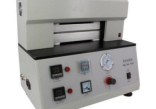
Inconsistent seal strength is one of the most elusive yet troublesome issues facing flexible packaging manufacturers. Many quality control professionals treat a "pass" on leak tests as a safeguard, only to face customer complaints regarding ruptured bags and leakage during transit. The root cause often lies not in the leak detection process itself, but in the sealing stage—specifically, a failure to achieve a secure seal. This article begins by explaining the adjustment logic of heat-sealing testers and clarifies how the three key parameters—temperature, pressure, and dwell time—affect seal strength.
Root causes and test methods for common instant noodle packaging quality problems: leakage, rising acid value, mold, off-odor, and film slipping.

Complete guide to GB/T 15171-2025 sealing performace testing for instant noodle packaging: bubble emission vs vacuum decay, acceptance limits, LTY-01 equipment.
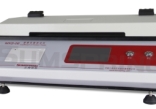
Complete guide to COF testing of flexible packaging film: ASTM D1894/ISO 8295/ GB10006 methods. Friction surface selection and typical values.

Micro-leakage Sealing Tester can detect food packaging sealing issues within 10 minutes
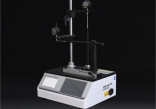
It is suitable for measuring the wall and bottom thickness of various containers—including ampoules, vials, oral liquid bottles, infusion bottles, beer bottles, and plastic bottles—and finds practical application in pharmaceutical packaging material testing, food packaging quality control, third-party inspection services, and materials research at academic and scientific institutions.

The value of the LTMFY-06S Leak and Seal Strength Tester lies in its ability to help users transform packaging seal integrity management from a binary "pass/fail" assessment into continuous monitoring of process capability.

The LTYLY-03S polariscopic stress meter from Link Testing is designed around two detection principles—quantitative compensation and qualitative color comparison—offering a measurement solution for laboratories and production lines that balances data precision with operational efficiency.

Link Testing provides a detailed interpretation below, covering key points of the standard, operational procedures, and application scenarios of right angle tearing test.

It encourages the company to consider the specific mechanical threats materials face in real-world usage environments and to quantify and manage these threats using scientific tools, thereby achieving a deep integration of product performance and user application scenarios.
The following case study illustrates how precision torque testing methods are applied to address practical challenges during the development of child-resistant closures (CRCs).