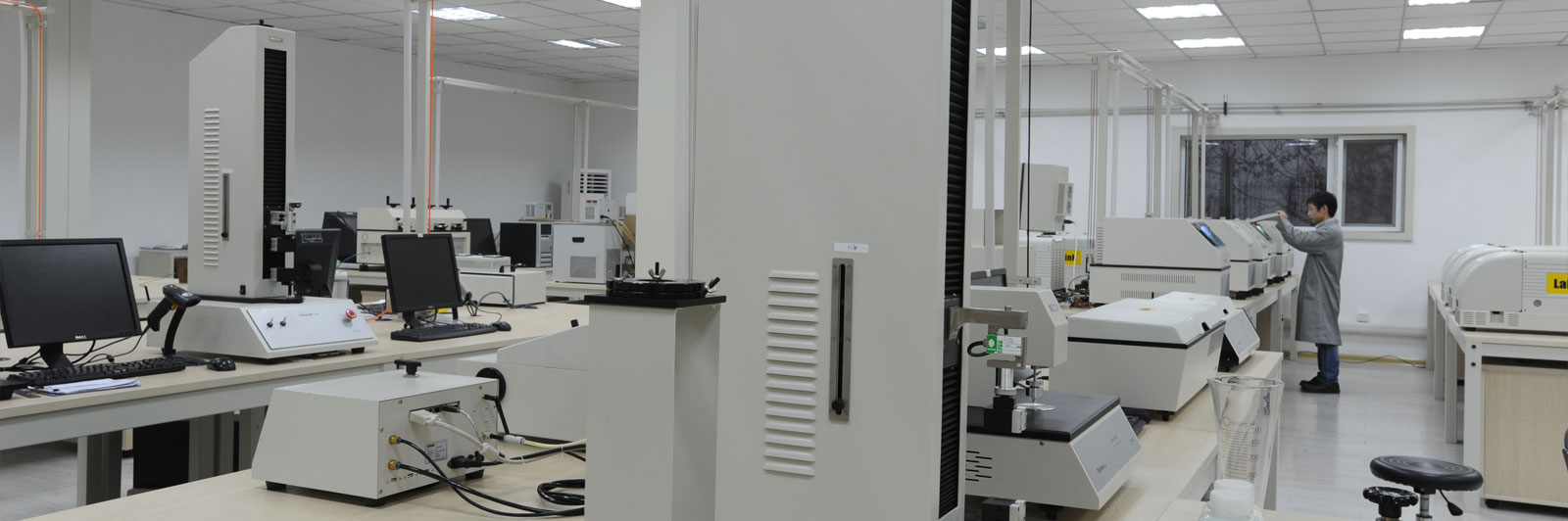


Source: Link Testing Instruments Co.,Ltd。
The calibration of a sealing tester is never just about adjusting the instrument; it's about safeguarding the lifeline of quality. In the pharmaceutical field, the ISO 11607 standard is the "fundamental law" for packaging sealing verification. It's not just a piece of paper, but a complete system that runs through design, verification, and production. Regular calibration of instruments and equipment is a crucial link in ensuring that this system is free from "systematic errors."
ISO 11607 Calibration Logic: Why is "Accuracy" More Important Than "Precision"?
Many people mistakenly believe that calibration is simply about making instruments more "accurate." However, in the context of pharmaceutical packaging, the primary goal of calibration is to ensure the "effectiveness" and "traceability" of the test results.
ISO 11607 requires that methods (including instruments) used to verify packaging integrity must be validated. This means that you must not only prove that the sealing instrument is "usable," but also that its test results accurately and reliably reflect the sealing condition of the packaging under actual storage, transportation, and use conditions.
For example, the Link Testing leak tester in our lab, which has been in service for many years, undergoes two major tests every year. The calibration engineers bring not ordinary weights, but a complete set of pressure standards traceable to national benchmarks. Each calibration essentially answers one question: when the instrument displays "-90 kPa," is the actual negative pressure the packaging withstands truly accurate?
Three Key Practical Points: Calibration is More Than Just "Zeroing"
Point 1: Linearity and Stability Calibration of the Pressure System
In pharmaceutical packaging leak detection, pressure is a critical parameter. According to the spirit of ISO 11607, calibration is far more than simply adjusting a "zero point" or "full-point."
In practice, we need to select at least five evenly distributed calibration points across the entire operating range of the instrument (e.g., from atmospheric pressure to -95 kPa negative pressure, or from atmospheric pressure to +200 kPa positive pressure). Engineers will use a standard pressure module, input precise pressure values, and record the instrument's displayed values. The core of calibration lies in verifying "linearity"—whether the instrument, throughout its entire range, behaves like a uniformly graduated ruler, with the error at each point within the allowable range.
For example, when testing sterile barrier systems, even minute pressure deviations can lead to misjudgments of the "detection limit," allowing minute leaks that should have been detected to escape. Therefore, linear calibration of the pressure system is the cornerstone of ensuring the sensitivity of the detection method.
Point 2: Calibration of Time Control and Leakage Judgment
Time is another critical variable in sealing tests. Whether it's the pressure holding time, the evacuation/pressurization time, or the observation time, all directly affect the results.
In the verification of standard leak holes, we use calibration pieces with standard micropores (e.g., 10 micrometers, 20 micrometers). The calibration process is strictly timed: the instrument needs to raise/lower the pressure to the set value within a specified time and maintain it stably; simultaneously, it must be able to reliably detect the leakage signal (e.g., bubble flow) generated by the standard leak hole.
This step calibrates the instrument's "judgment ability." Our laboratory's Link Testing instruments ensures that its time control accuracy and sensor sensitivity are consistently objective in judging "leakage" and "no leakage" during actual testing through repeated comparisons with "standard leaks."
Point 3: Comprehensive Environmental and Equipment Validation
ISO 11607 emphasizes "process validation." Instrument calibration cannot be separated from its operating environment and methods.
Therefore, our calibration log includes not only pressure and time values, but also:
Ambient temperature and humidity records: Because temperature affects air density and material elasticity, thus subtly influencing pressure readings.
Test solution verification: If using the water immersion method, the cleanliness, temperature, and whether a wetting agent has been added to the test solution (usually purified water) must be verified and recorded.
Auxiliary device checks: Such as whether the vacuum chamber's seals are intact, whether the viewing window is clear, and whether the piping is aged or blocked.
These seemingly peripheral details together constitute a reliable testing system. Each calibration is a comprehensive "check-up" of this system.
After calibration: Internalizing standards into daily habits
Completing a perfect calibration report is not the end. The real challenge lies in how to extend the "accuracy" confirmed by calibration to every routine test.
We have established a strict periodic verification system: During the calibration cycle, we use a midpoint pressure calibrator for rapid checks and regularly run positive control tests using standard leak test pieces. This is like setting up checkpoints along a long-distance race, ensuring the instrument is always "online."
The airtightness of pharmaceutical packaging forms an invisible barrier to patient safety. The calibration of the sealing tester is the "gatekeeper" protecting this barrier. Every rigorous calibration reflects the commitment to the spirit of the ISO 11607 standard—ensuring flawless quality with verifiable data.
When the instrument restarts and emits its familiar operating sound, we know that every "qualified" signal it outputs carries the weight of trust validated through multiple layers of verification. This trust is the very foundation upon which the pharmaceutical industry depends for its survival.
For more details please visit www.linktesting.org