答:
Paper breakage usually occurs due to insufficient moisture content in the paper (caused by dry environment which makes the paperboard brittle), or excessive pressure in the embossing mold and too deep embossing lines. Gluing failure is mostly caused by too low viscosity of the glue, excessive coating amount, or excessive water absorption of the paperboard surface. These problems are particularly common during the dry winter season.
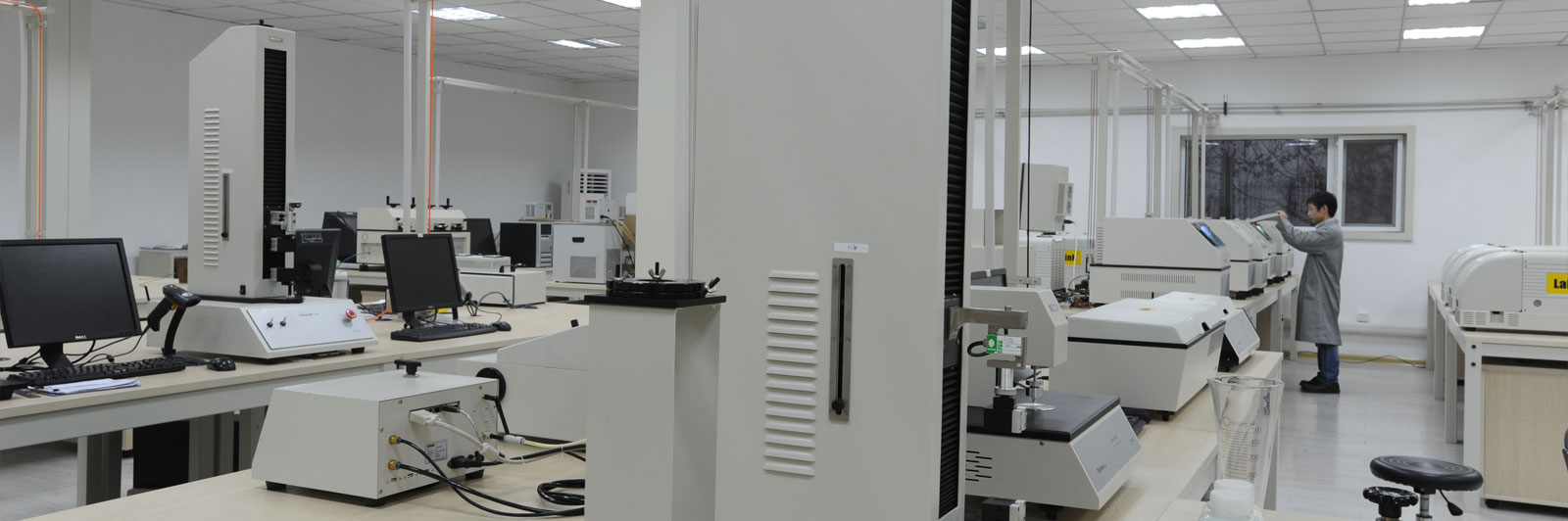
Solution: Control the humidity of the workshop environment (recommend maintaining at 50% to 60% RH); Calibrate the pressure and depth of the embossing mold according to the paper weight and type; Select the appropriate viscosity of the glue and control the coating amount; If necessary, an anti-seep coating can be added to the surface of the paperboard. The test can be conducted by the tensile tester to test the adhesive performance LTXLW-500n (https://www.linktesting.org/7007.html/automatic-tensile-tester-xlw-500n/).
答:
The problem lies in the fact that there are trace amounts of contamination in the sealing area that are invisible to the naked eye. Such contaminants include lubricating oil mist from the production environment, dust, and the sweat of the operators. These contaminants prevent the fusion of the molecular layers of the heat seal at the microscopic level, resulting in a heat seal strength far below the normal value. For instance, in a certain case, the strength of the contaminated seal was only 6.0 N/15mm, which was less than one-sixth of the strength of the un-contaminated area (37.5 N/15mm).
Solution: Keep the filling equipment clean to prevent the splashing of lubricating oil and cleaning agents; Standardize the personal protective equipment (gloves, masks) worn by operators; Increase the inspection frequency of the surface cleanliness of the heat sealing area; Regularly use surface energy testing (determination pen) to check if the heat seal layer has been contaminated.
答:
This is usually due to the poor compatibility between the heat-sealing adhesive layer of the film and the material of the cup or bowl, or the gradual penetration and migration of the contents (especially foods containing oils or acidic components) weakening the interfacial adhesion. The longer the time, the more significant the attenuation of the peel strength becomes.
Solution: During the material selection stage, conduct a content migration simulation experiment (such as using oils, acetic acid, etc. to accelerate aging), and test the peel strength after aging The test can be conducted by the tensile tester XLW-500N(https://www.linktesting.org/7007.html/automatic-tensile-tester-xlw-500n/) and Flex Durability Tester RCT-02 (https://www.linktesting.org/4261.html/gelbo-tester-rct-02/); select a heat-sealing adhesive that matches the chemical structure of the cup and bowl materials; strictly control the surface cleanliness during the injection molding of the cups and bowls to avoid the influence of residual release agents on the sealing.
答:
The main reason is that the thermal contraction rates of the materials in each layer of the composite film do not match. The high temperatures during the printing, compounding, and curing processes cause each layer to contract to varying degrees, resulting in an imbalance of internal stress. If the difference in contraction rates between the two layers of the BOPP/CPP composite structure exceeds 0.5%, the finished bag is highly prone to warping. Additionally, the tension changes brought about by the ink and solvents during the intaglio printing process may also exacerbate this problem.
Solution: When selecting materials, ensure that the thermal shrinkage rates of each layer of the base material are matched (it is recommended that the difference be within 0.5%) The test can be conducted by the heat shrink tester LTRSY-03 (https://www.linktesting.org/2334.html/thermal-shrinkage-tester-ltrsy-03/); optimize the tension and drying temperature during printing and compounding to reduce cumulative internal stress; perform heat setting treatment or hanging-based curing on the finished product to release the stress.
答:
This is not a solvent residue issue. In some inks, the binders (resins) or pigments may undergo chemical reactions such as oxidation and hydrolysis during storage, resulting in the production of low-molecular-weight volatile substances. For instance, in oxidative polymerization inks, the partially unreacted drying oil will continue to oxidize under certain temperature and humidity conditions, releasing aldehyde and ketone substances with a "paint-like" odor.
Solution: Replace the traditional solvent-based inks with reactive curing inks (such as UV inks, water-based inks); conduct accelerated aging tests on the finished products (e.g., storing at 40°C and 75% RH for 7 days) The test can be conducted by the aging chamber, and then perform odor sensory evaluation to detect potential odor issues in advance.
Response within 24 hours · Factory-direct quotation · ASTM / ISO compliant