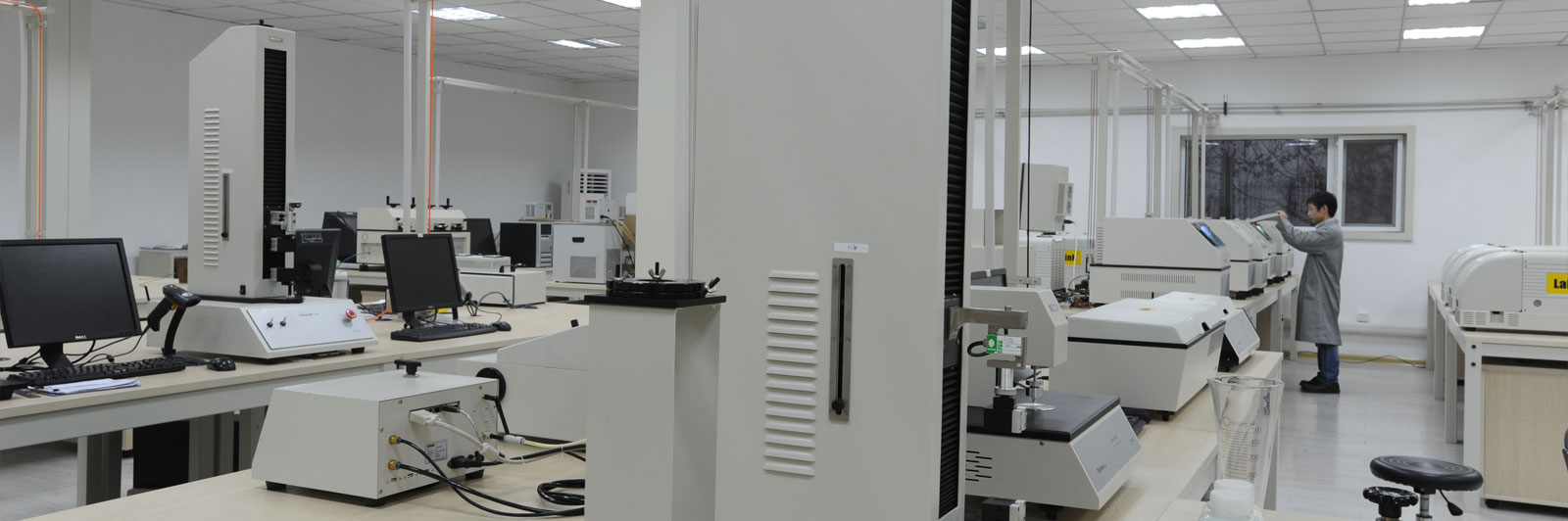


Source: Link Testing Instruments Co.,Ltd.

In the pharmaceutical industry, packaging closures for solid oral dosage forms (such as tablets and capsules) must meet conflicting requirements: preventing unauthorized opening by children while ensuring easy access for adults, particularly the elderly. Achieving this balance relies heavily on the precise mechanical design of the closure's locking mechanism, with opening and locking torques serving as key metrics for quantifying performance. The following case study illustrates how precision torque testing methods are applied to address practical challenges during the development of child-resistant closures (CRCs).
I. Case Background: Development Challenges for a New Child-Resistant Cap
A pharmaceutical company planned to switch to a new "push-and-turn" child-resistant cap for a common prescription medication. Two key issues arose during the early stages of R&D:
Compliance Verification: The new design had to pass rigorous child-resistant packaging test standards in target markets (such as the US and EU). These standards mandate that a specific percentage of children fail to open the package within a set timeframe, while ensuring that adults—particularly the elderly—can open it without difficulty.
Defining the Process Window: On the production line, the tightening torque applied by the capping machine must fall within a precise range. Insufficient torque could result in a poor seal or allow children to open the bottle easily; excessive torque could make it difficult for adults to open, particularly affecting users with arthritis.
To address these issues, the project team introduced a torque tester equipped with high-precision torque sensors and specialized cap fixtures to systematically evaluate pilot-production samples.
II. Testing Strategy and Execution Process
The project team designed a two-phase testing plan to simulate two critical usage scenarios:
LTXGY-03S Fully Automatic Bottle Cap Torque Tester: Field Test
Phase 1: Simulating Adult Opening to Define the Upper Torque Limit
Test Subjects: 200 filled and capped samples randomly selected from the pilot production line.
Test Method: A torque tester was used to simulate the initial opening action performed by an adult. The testing procedure recorded the maximum torque required to open each bottle.
Data Analysis: Statistical results showed an average opening torque of 25.6 N·cm for the batch, but with a wide distribution range (18.5 N·cm to 34.2 N·cm). Further analysis revealed that samples requiring more than 30 N·cm of torque were described as "very difficult to open" during subsequent tests involving a panel of elderly volunteers.
Preliminary Conclusion: To ensure accessibility for all adult users, the upper limit for opening torque should be set at 30 N·cm. Tightening torque control on the production line needs to be tightened to reduce variability.
Phase 2: Evaluating Child-Resistant Efficacy and Defining the Lower Torque Limit and Structural Effectiveness
Test Subjects: The same batch of samples, along with older "twist-off" caps prepared for comparison. Test Method: This phase focuses on measuring the "torque required for direct rotation without proper downward pressure," a critical metric for assessing the risk of accidental opening by children. The instrument measures rotational torque under two conditions: without downward pressure and with standard downward pressure applied.
Key Findings: For the new "push-and-turn" cap, the "direct rotation torque" required when no downward pressure is applied reaches 45–50 N·cm—far exceeding the average hand strength of children. In contrast, the opening torque for the old-style screw cap is only around 20 N·cm. Meanwhile, test data confirms that when proper downward pressure is applied, the rotational opening torque of the new cap stabilizes at approximately 25 N·cm, aligning with the opening torque data observed for adults in the first phase.
Structural Verification Conclusion: The test data objectively confirms that the "push-down" action is a necessary condition for opening the new cap. Its mechanical design effectively prevents children from opening the bottle via direct rotation, thereby preliminarily meeting the mechanical principles required for child-resistant packaging.
III. Data-Driven Decision Making and Process Optimization
Based on the systematic test data mentioned above, the project team made the following key decisions:
Setting Process Parameters: The target tightening torque for the production line's capping machine was set at 22 N·cm, with a tolerance range of ±3 N·cm. This provides a reasonable margin relative to the target adult opening torque (approx. 25 N·cm) while ensuring sufficient tightening force.
Establishing In-Line Sampling Standards: Based on the test results, the quality department developed standard operating procedures (SOPs) for in-line sampling. Using the same model of torque tester, finished bottles are regularly checked for opening torque, with an acceptable range of 18 N·cm to 30 N·cm.
Supporting Compliance Testing: Precise torque test data provided robust preliminary evidence for subsequent formal testing with child and senior panels (submitted to certification bodies), thereby reducing the risk of failure during formal certification.
IV. Summary
By integrating precision torque testing into the early stages of cap development, the pharmaceutical company transformed packaging design issues—which previously relied on subjective judgment and carried risks associated with late-stage certification—into quantifiable, controllable engineering parameters. This case demonstrates that targeted torque testing not only verifies whether the packaging meets regulatory mechanical requirements but also directly guides the precise setting of production process parameters; this enables the establishment of a reliable, data-driven balance between child safety and adult accessibility, ultimately ensuring medication safety and a positive patient experience.
Response within 24 hours · Factory-direct quotation · ASTM / ISO compliant