Source: Link Testing Instruments Co.,Ltd.
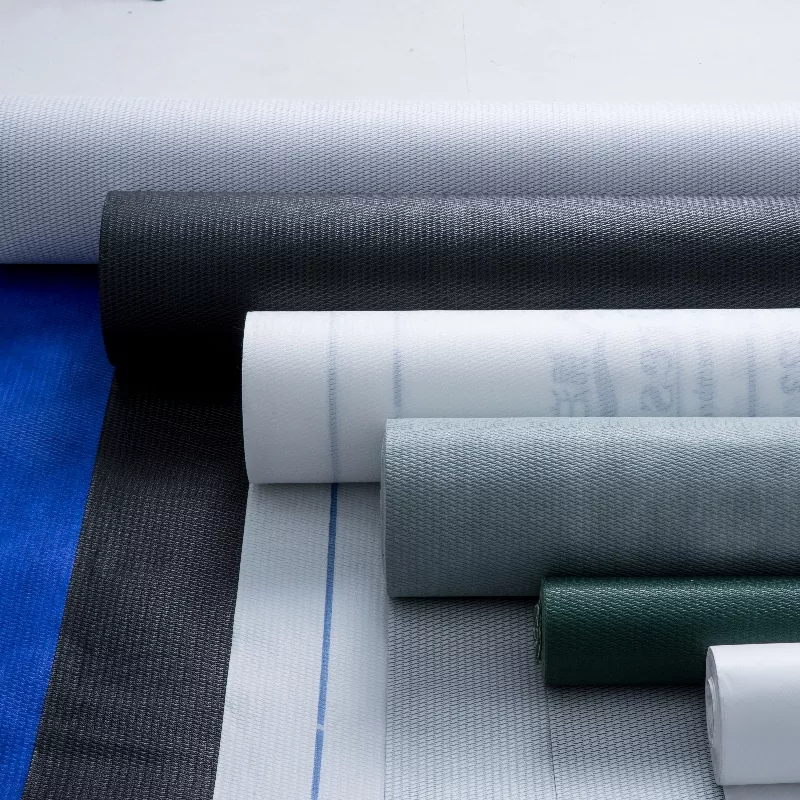
In the construction of green buildings and high-standard industrial facilities, water-resistant, vapor-permeable membranes installed within the building envelope serve as critical materials for balancing airtightness, watertightness, and vapor permeability. Typically composed of multi-layer composite polyolefin films less than 0.5 mm thick, these membranes must withstand not only the stresses encountered during their decades-long service life but also accidental impacts during construction—such as dropped tools or flying debris. After launching a new generation of high-performance membranes, a premium building materials supplier received consistent feedback from large-scale project sites: during roof or exterior wall installation, lightweight tools (like wrenches or pliers) accidentally dropped by workers would occasionally puncture the membrane, creating inconspicuous micro-holes. These punctures compromised localized watertightness, leading to failures in subsequent water spray tests. Thus, despite the material’s excellent performance in standard metrics like tensile and tear strength, these "accidental impacts" on the construction site emerged as a significant pain point.
I. Specific Issue: "Low-Energy Blunt Impact" Failure in Construction Scenarios
The waterproof, breathable membrane developed by the company consists of a composite of a reinforcing mesh and a specialized functional layer, designed for high strength and durability. However, analysis of damaged samples returned from construction sites revealed that the damage typically consisted of circular or star-shaped perforations (a few millimeters in diameter) with tensile deformation at the edges—characteristic of damage caused by the perpendicular impact of a blunt object. Traditional drop-dart impact tests (used to evaluate film toughness against sharp-object impacts) could not accurately simulate these specific service conditions. Project engineers realized that the bottleneck likely lay in the membrane's resistance to perpendicular, low-energy, blunt impacts—a performance characteristic overlooked in standard laboratory evaluation protocols. They required a tool capable of precisely quantifying this performance to assess differences between membrane materials of varying formulations or production batches.
II. Precise Performance Mapping Using the LTMC-AB Drop-Dart Impact Tester
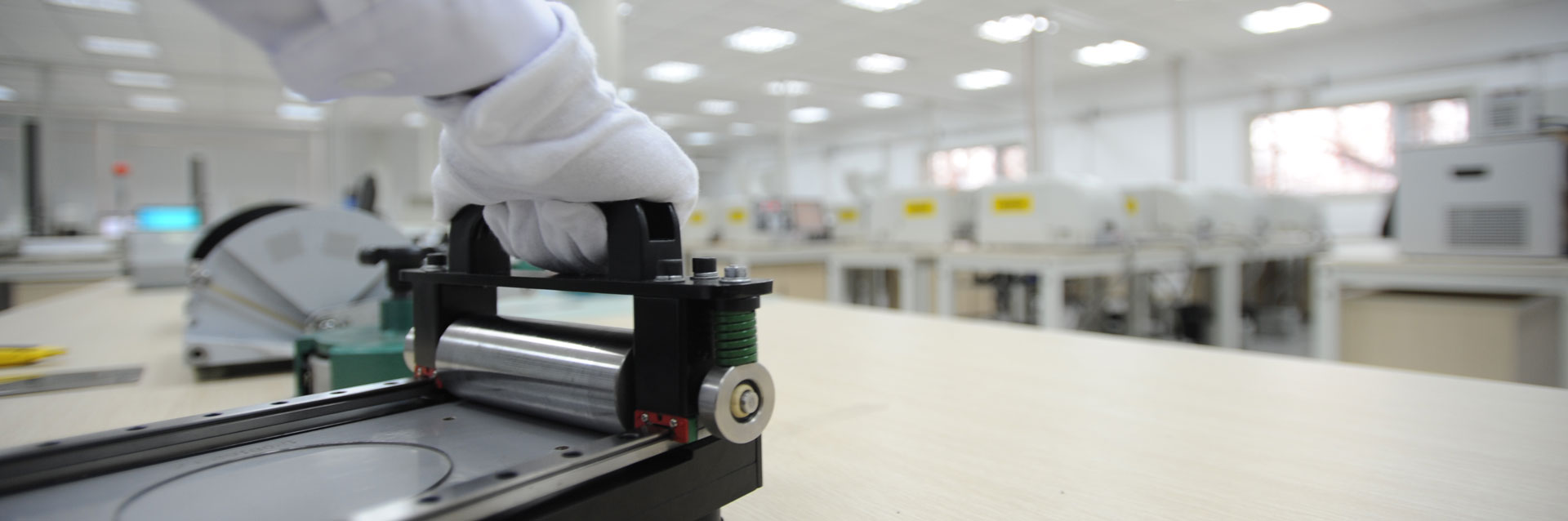
The company's materials laboratory decided to use the LTMC-AB Drop-Dart Impact Tester—specifically Method A (utilizing a Φ38mm hemispherical dart head to simulate blunt impact)—to systematically evaluate the membrane's impact resistance and identify performance thresholds.
Test Objective: Rather than simply determining "failure vs. no failure," the goal was to precisely measure the "impact mass causing failure in 50% of samples" (F50). This is a statistically more reliable key indicator that better reflects the material's overall toughness.
Test Method: Samples were taken from two membrane batches: Batch M (from a production period associated with frequent site complaints) and Batch N (with no record of complaints). Testing was conducted on the LTMC-AB in strict accordance with the GB/T 9639 Method A standard. The instrument automatically executed the "staircase method" (or up-and-down method), intelligently adjusting the dart mass based on results; after impacting approximately 20 samples, it precisely calculated the F50 value (in grams) and the corresponding impact energy for each batch.
Key Data Findings:
Batch N (Stable Performance): The F50 value was 620 grams. The data showed good repeatability, indicating uniform material quality.
Batch M (Issue-related): The F50 value was 510g. Not only was the average value approximately 18% lower, but testing also revealed a difference in failure modes: at comparable impact energy levels, Batch M tended to fail via brittle puncture, whereas Batch N typically exhibited tearing following significant deformation.
Preliminary Conclusion: There is a quantifiable reduction in the intrinsic toughness of Batch M material regarding resistance to blunt impact; this directly correlates with the observation that the material is more prone to damage on-site.
Data Traceability: Correlating F50 test data with production records revealed that Batch M utilized "enhanced polyolefin" raw material pellets from a new supplier, whereas Batch N used raw materials from an established, stable supplier.
Collaborative Analysis: The company conducted a joint analysis with the raw material supplier. A comparative analysis of the formulations for both pellet types suggested room for improvement regarding the distribution uniformity or proportion of impact modifiers (such as elastomers) in the new material. This deficiency resulted in reduced overall impact energy absorption capacity in the co-extruded film. The F50 value from the dart drop test sensitively captured the macroscopic performance changes resulting from these microstructural differences.
III. Data-Driven Material Control and Construction Guidance
Based on the objective, quantitative data provided by the dart drop impact tester, the company implemented a series of improvements, extending quality control from the laboratory to the construction site.
Optimization of Raw Material Standards and Supplier Management:
Officially incorporated the "dart drop impact F50 value" into technical procurement agreements for the raw material pellets used in waterproof-breathable membranes, mandating a minimum F50 value of 580g (a safety margin established based on the benchmark value of Batch N).
Utilized the LTMC-AB test report as the core basis for technical negotiations with the new raw material supplier, driving them to refine their formulation until the film produced from their sample material passed the F50 test. Establishing a performance-based factory grading and traceability system:
Samples are taken from each roll (or batch) of finished geomembrane on the production line, and the LTMC-AB is used to conduct rapid F50 testing (streamlining sample quantities for quick assessment).
The membranes is graded based on performance results. Batches with high F50 values are prioritized for key projects involving complex construction environments and high risk, while batches meeting standard requirements but not achieving peak performance are allocated to projects with more favorable construction conditions. Additionally, a unique performance data identifier is assigned to each roll to ensure full traceability.
Developing targeted construction protection guidelines:
Based on the measured F50 impact energy data (approximately X Joules), the company created an intuitive "On-Site Geomembrane Protection Guide." Using plain language and illustrations, the guide informs construction teams: "This product can withstand an impact equivalent to an XX-gram tool falling from a height of XX meters; please take special care during construction to prevent sharp objects or heavy items from falling from heights exceeding this limit." It also recommends the use of specialized protective pads and other tools, effectively translating laboratory data into actionable on-site protocols.
IV. Implementation Results and Industry Value
By adopting the dart-drop impact F50 value as a core control metric, the building materials company successfully reduced related on-site complaints by over 70% and significantly boosted key clients' confidence in product reliability. The profound significance of this case lies in:
Transforming vague "impact resistance" requirements into precise engineering parameters: The F50 value provided by the dart-drop impact tester establishes a universal, comparable, and quantitative standard for vertical impact toughness regarding "flexible" materials like construction film.
Upgrading the quality philosophy from mere "standard compliance" to "application suitability": It encourages the company to consider the specific mechanical threats materials face in real-world usage environments and to quantify and manage these threats using scientific tools, thereby achieving a deep integration of product performance and user application scenarios.
Response within 24 hours · Factory-direct quotation · ASTM / ISO compliant